
Why Is My French Press Coffee Bitter?

Why Is My French Press Coffee Bitter?: 7 Causes and Practical Fixes
A French press should taste rich and rounded—not aggressively harsh, burnt or mouth-drying. If your cup is bitter, first identify whether the problem comes from extraction, the roast, sediment or residue on your equipment. You can usually improve the next brew without buying anything new.
Not every bitter cup is over-extracted. Coffee naturally contains bitter-tasting compounds, and roast level, water composition, grinder fines and personal preference all shape the result. This guide separates those causes before recommending a fix.
Identifying Bitter, Astringent, and Overly Strong Coffee
Bitterness is a flavor sensation often described as quinine-like, dark or lingering. Astringency is different: it feels drying or puckering on your tongue and cheeks. A very dark roast may taste pleasantly bittersweet; a muddy brew may seem harsh because fine particles remain suspended in the cup. These clues matter because they suggest different adjustments.
Seven Common Causes of French Press Bitterness
1. The grind is too fine or uneven
Fine particles expose more surface area and can extract quickly. They also pass through a metal mesh more readily, leaving a silty cup. Try moving a burr grinder slightly coarser while keeping the dose, water and steep time unchanged. Medium-coarse is a useful starting point, not a universal rule: grinder burrs and beans vary.
2. Contact time is longer than your recipe requires
A four-minute steep is a practical baseline, but it is not a chemical cutoff. Immersion extraction slows as the water and grounds approach equilibrium, so longer steeping does not automatically make every cup bitter. If a particular coffee tastes harsh, compare four minutes with a slightly shorter brew using the same grind.
3. Your water temperature does not suit the roast
Water around 93–96°C (200–205°F) works as a starting point for many coffees. If a very dark roast tastes sharp or roasty, a slightly cooler test may help. Boiling water does not literally burn grounds in a French press; the roast has already been exposed to far higher temperatures. Water temperature changes extraction and flavor balance rather than scorching the beans.
4. You leave brewed coffee in the press
Plunging separates most grounds from the drink, but the liquid still sits against the bed at the bottom. Later cups can taste different because of continued contact, settling particles and temperature changes. Pour the finished batch into mugs or a separate carafe instead of storing it in the press.
5. The beans are very dark-roasted or stale
Dark roasts can taste smoky, charred or strongly bittersweet even with a sound brewing technique. If you dislike those flavors, try a fresh medium roast before making extreme recipe changes. Staleness more often produces dull, flat flavor than a single distinctive bitter note, but it can make an already harsh cup less pleasant.
6. Coffee oils and old residue remain in the filter
The metal mesh, plunger assembly and lid can trap oily residue. Dismantle the filter according to the manufacturer’s instructions, wash with mild detergent, rinse thoroughly and dry. A rancid or soapy aftertaste is a cleaning problem, not necessarily an extraction problem.
7. You mistake concentration or sediment for bitterness
A heavy 1:13 recipe may taste intense without being over-extracted. A lighter 1:16 or 1:17 brew can be easier to evaluate, but changing the ratio affects strength and extraction in different ways. If your cup is gritty, reduce fines, pour more gently and leave the last sediment-rich sip behind.
Bitterness Diagnosis and Adjustment Table
Match the most noticeable symptom to a single practical test. This keeps the diagnosis focused and avoids changing several brewing variables at once.
| What you notice | Most useful first check | One controlled adjustment |
|---|---|---|
| Harsh, dry finish with sludge | Very fine or uneven grounds | Grind slightly coarser |
| First mug fine, later mug harsher | Coffee left in press | Decant entire batch promptly |
| Smoky, charred bitterness | Very dark roast | Try a medium roast |
| Bitter after long steep | Contact time | Compare a shorter steep |
| Intense but otherwise pleasant | High coffee concentration | Try 1:16 or dilute slightly |
| Old-oil or stale aftertaste | Dirty mesh or old beans | Clean equipment and test fresh beans |
| Sharp and sour, not bitter | Possible under-extraction | Try a slightly finer grind |
A Consistent Starting Recipe for Balanced Flavor
Coffee: 30 g, freshly ground medium-coarse
Water: 480 g (approximately 480 mL)
Ratio: 1:16 by weight
Water temperature: 93–96°C / 200–205°F
Steep: approximately 4 minutes
Finish: press gently and pour the entire batch into cups or a carafe
These are repeatable starting parameters, not a guarantee that every roast tastes best at the same settings.
Six-Step Visual Guide to Reducing Bitterness
Use this visual workflow before the detailed steps. The goal is to diagnose the problem without changing grind, dose, temperature and time all at once.
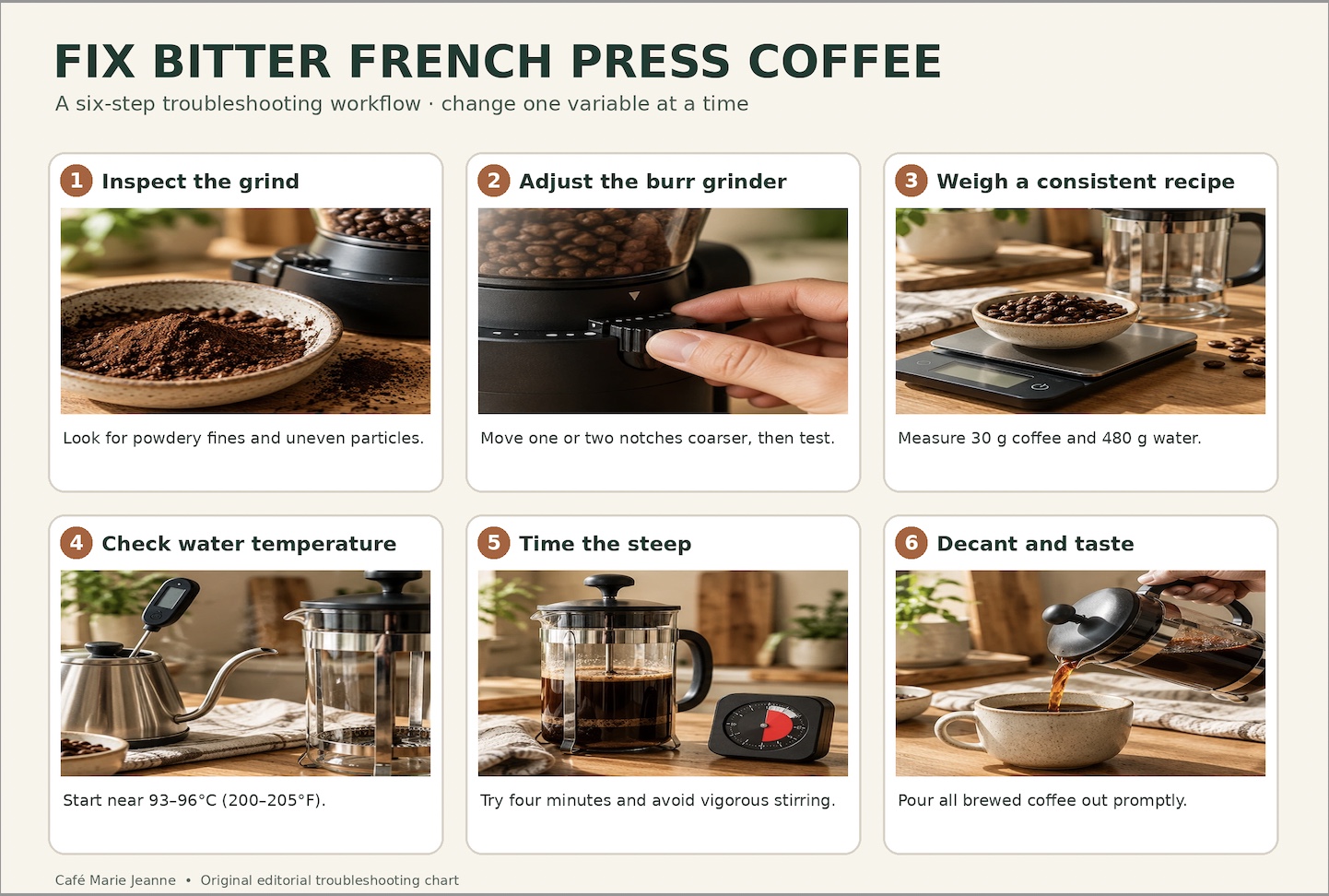
Step-by-Step Brewing Adjustments
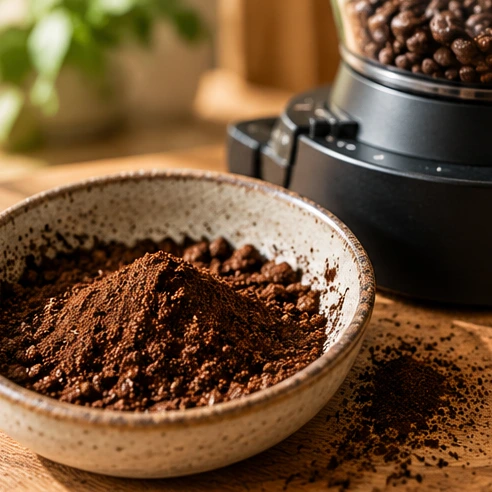
1Inspect the grind
Before adjusting the recipe, inspect a small sample of dry grounds. Look for powdery fines, very uneven particles, or a grind that seems much finer than medium-coarse. Compare this observation with the finished cup: gritty texture points toward fines, while smoky flavor may come from the roast rather than grind size alone.
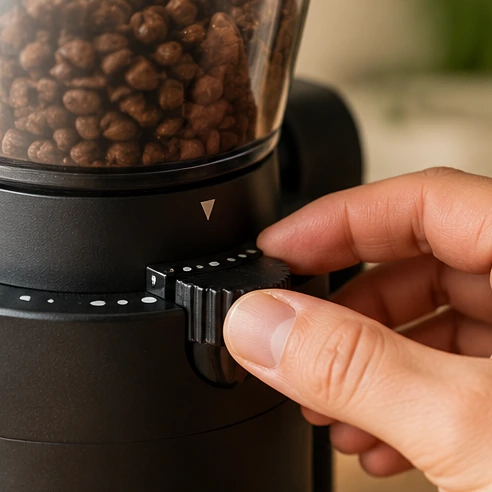
2Adjust the burr grinder
Turn the burr grinder only one or two increments coarser than the last batch. Avoid changing the water temperature or brew time during this comparison. If the brew turns thin or sour, the adjustment may have gone too far.
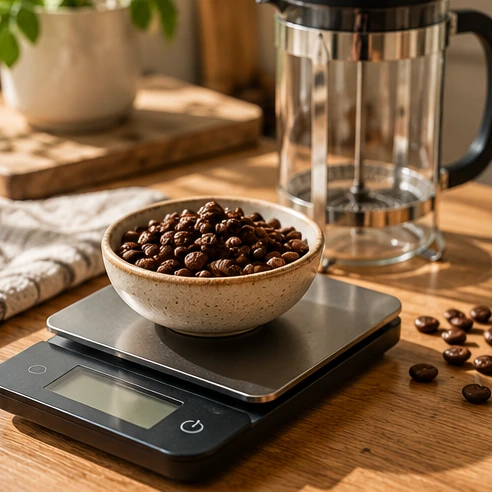
3Weigh a consistent recipe
Weigh 30 g of beans and 480 g of water instead of relying on scoops. A stable ratio lets you judge the effect of the grind change. Keep notes about bean origin and roast so you can reproduce a better cup.
4Check water temperature
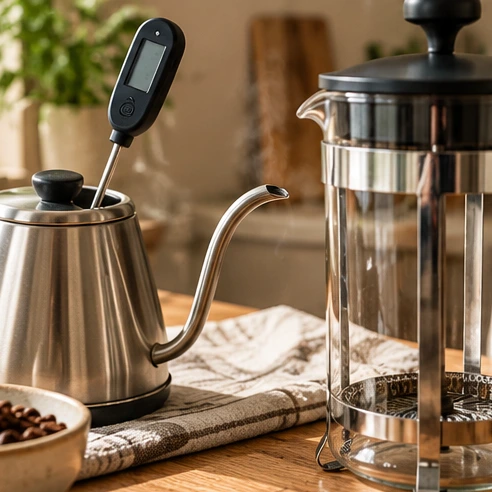
Use a thermometer if available and begin around 93–96°C (200–205°F). A slightly lower temperature can be worth testing for a very dark roast. Do not assume that every bitter cup is caused by hot water.
5Time the steep
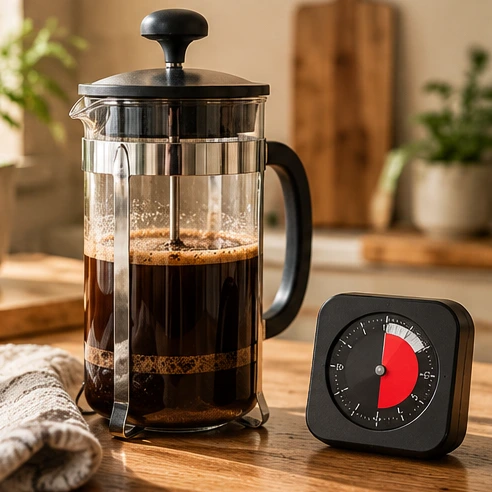
Wet all grounds evenly, start a timer and allow about four minutes as your baseline. Avoid unnecessary vigorous stirring. If your previous recipe was much longer, compare the same coffee at a shorter contact time.
6Decant and taste
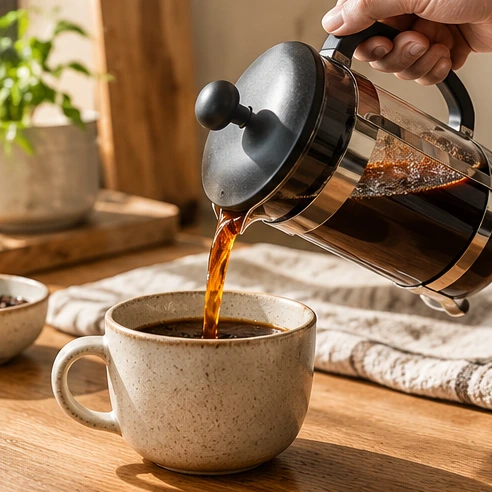
Lower the plunger gently without forcing it. Pour all brewed coffee into mugs or a carafe immediately; do not leave the second serving resting on the grounds. Taste as the cup cools, then change only one variable next time.
Choosing the Right Adjustment for Each Flavor Problem
Start with the symptom rather than following a rigid hierarchy. Fine grounds plus sludge: adjust the grind first. Smoky bitterness from a dark roast: test a lighter roast or slightly cooler water. Only the second mug is unpleasant: decant sooner. A long, harsh steep: shorten the steep for a comparison. Keep the other settings fixed so the result tells you something useful.
How Coffee Dose Affects Strength and Bitterness
Not reliably. More coffee at the same water weight increases beverage strength, which can make harsh flavors more noticeable even if extraction yield changes. For troubleshooting, use a stable 1:16 ratio first. If the brew tastes balanced but too intense, try 1:17. If it tastes weak and sour, diagnose extraction before adding extra grounds.
French Press vs Pour-Over: Flavor, Oils, and Sediment
A French press retains more oils and fine particles because its mesh filter is more open than paper. This gives a heavier mouthfeel that some drinkers perceive as harsher. Pour-over typically produces a clearer cup, but neither method is inherently over-extracted. The roast, water, grind and recipe still determine the flavor.
A Controlled Taste Test for Persistent Bitterness
Try a simple side-by-side test. Brew two small batches using the same beans, water and ratio; change only the grind slightly. Taste both at similar temperatures. If neither improves, test a different roast or clean the press thoroughly. Record the dose, water weight, grind setting, time and your sensory notes. This is more informative than changing four settings at once.
Editorial Method and References
This article synthesizes established brewing concepts and published guidance; it does not claim an independently conducted sensory panel or lab extraction testing. AI-generated photographs illustrate steps and should not be interpreted as documentation of an actual test. Useful reading: Compass Coffee — French Press Brew Guide; Barista Hustle — Coffee Compass; Stumptown Coffee — French Press Guide.
Frequently Asked Questions
Why is my French press coffee bitter even after four minutes?
Four minutes is a starting point, not a guarantee. Very fine grounds, dark roasting, dirty filters or a high concentration may still make the cup unpleasant. Change one factor at a time.
Can I use boiling water in a French press?
Yes, boiling water does not scorch already-roasted grounds, but its higher temperature can change extraction. For an easy starting point, use water around 93–96°C (200–205°F), then adjust by taste.
Does a finer grind make coffee more bitter?
It can increase extraction and produce more fines, which may create a harsh or silty cup. Whether the final drink tastes bitter depends on the rest of the recipe and the beans.
Is bitter French press coffee over-extracted?
Sometimes. Excess extraction can contribute to bitterness, but roast-derived bitter flavors, old residue and suspended fines can produce similar complaints.
How long should French press coffee steep?
About four minutes is a straightforward baseline. Some methods use longer steeping and settling periods successfully; compare recipes rather than treating one time as universal.
Should I stir French press coffee?
A gentle stir can help wet dry grounds, but aggressive repeated stirring may suspend fines. Use a consistent technique for fair comparisons.
Does pressing the plunger stop extraction?
Not completely. The mesh pushes most grounds down, but brewed coffee can remain in contact with them. Decanting the entire batch is a simple way to separate it.
Will a lighter roast fix bitterness?
If the unpleasant flavor is smoky or charred, a lighter roast may help. If the real issue is fine grounds or dirty equipment, changing beans alone may not solve it.
Can I rescue coffee that is already too bitter?
Adding a little hot water or milk may soften the perceived intensity, but it will not reverse extraction. Use the next brew to correct the underlying cause.
Why is there sludge at the bottom of my French press?
Metal filters allow some fine particles through. A more consistent grinder, gentler plunging and leaving the final sediment-rich sip behind can reduce it.
What is the best French press coffee-to-water ratio?
Start around 1:16 by weight, such as 30 g coffee to 480 g water. Use 1:15 for a more concentrated cup or 1:17 for a lighter one, while judging extraction separately.
Should I wash my French press with soap?
Yes. Mild dish detergent and thorough rinsing help remove old oils. Follow the manufacturer’s instructions when disassembling the filter.

Hi, I’m Sophie Laurent, a passionate coffee enthusiast and lifestyle writer with a special interest in coffee brewing, specialty coffee, coffee beans, French café culture, and professional coffee preparation techniques. I enjoy exploring the fascinating world of coffee, from espresso, cappuccino, and latte to French press, pour-over, cold brew, and traditional French coffee, with a focus on understanding their unique flavors, aromas, brewing methods, and characteristics.
When I’m not researching the latest coffee trends and brewing traditions, I’m exploring coffee bean varieties, roasting profiles, grind sizes, brewing ratios, extraction methods, coffee equipment, and techniques for making better coffee at home. My goal is to make coffee-related topics easy to understand by providing honest, practical, and well-researched information that helps readers choose the right coffee beans, improve their brewing techniques, compare different coffee methods, and discover flavors that match their personal preferences.
I write for Cafe-Marie-Jeanne.com, where I share detailed brewing guides, helpful comparisons, and practical advice about coffee, with a particular focus on coffee quality, brewing methods, coffee beans, grind size, coffee-to-water ratios, extraction, brewing equipment, flavor profiles, and French coffee traditions. My mission is to help readers make informed decisions, develop their coffee knowledge, master everyday brewing techniques, and enjoy delicious, café-quality coffee at home with confidence.